Deep Cheek and Jaw Tension
Some people describe the lower face as hard, bulky or tired. Buccal access may create a more direct route into that tissue when slower external work alone is not enough.


Currumbin Waters studio
A slower, complementary facial treatment direction that may support deep cheek and jaw tension, clenching patterns, facial heaviness and a feeling that the lower face is always working harder than it needs to.
At Her Solis, buccal massage is not positioned as a cure, a dramatic sculpting trick, or a replacement for dental or medical care. It is careful soft-tissue work used when direct access through the cheeks makes sense and the tissue is ready for it.
The treatment
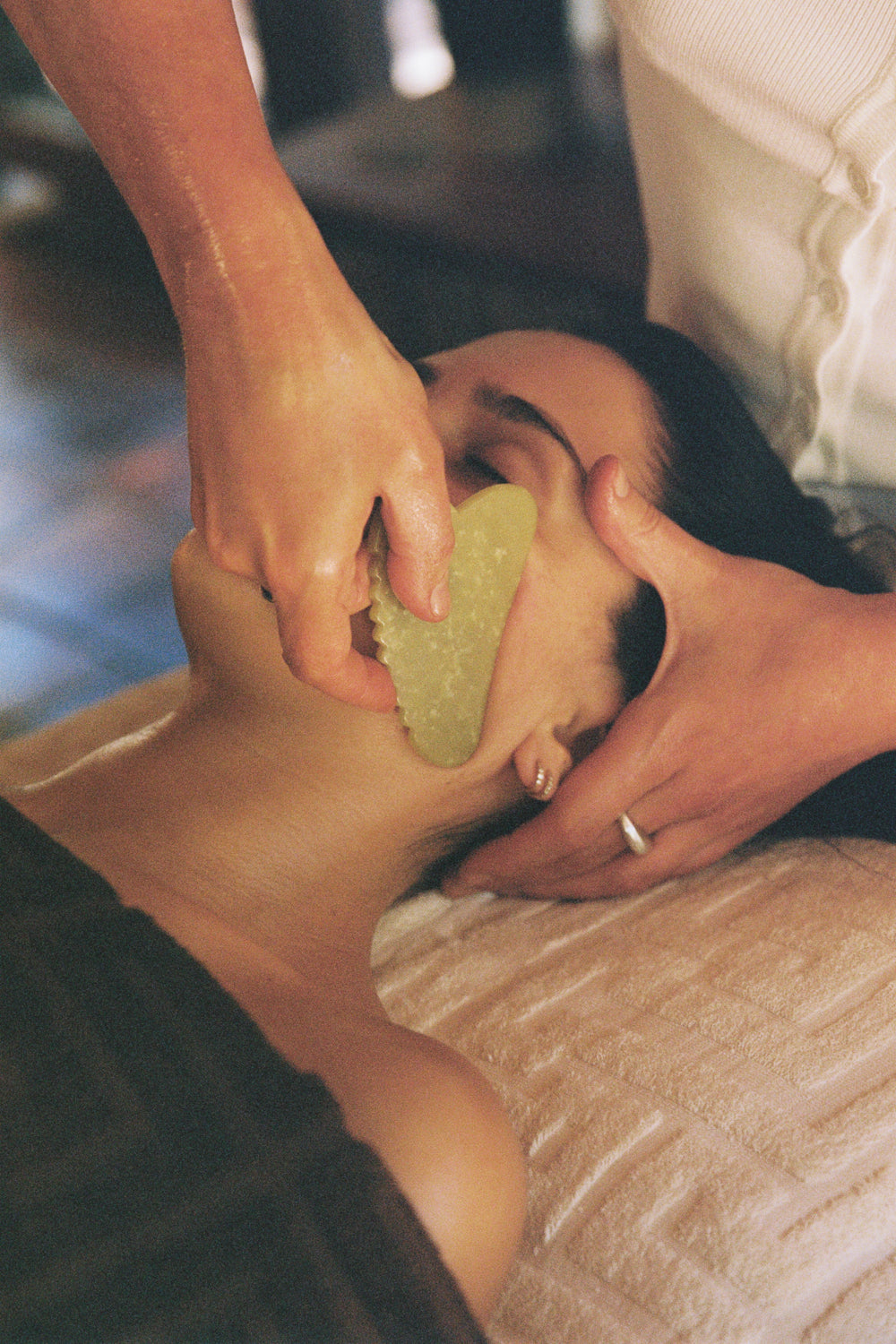
Buccal massage is facial soft-tissue work that may include both external contact and, when appropriate and clearly consented, intraoral contact through the inside of the cheeks. That access can make it easier to work around dense, overused tissue that sits deeper than the surface of the jawline.
People usually search for buccal massage when the cheeks, jaw and lower face feel chronically loaded, when clenching is familiar, or when facial sculpting language has led them toward intraoral work. At Her Solis, the decision to use buccal work is based less on trend language and more on whether it suits the tissue, the symptoms and the client's comfort on that day. If you are still deciding whether the issue is general clenching, TMJ-adjacent tension, lymphatic heaviness, cup-suitable jaw holding or deep cheek restriction, start with Jaw Tension Support, Facial Cupping for TMJ and Jaw Tension or the decision guide Buccal Massage vs TMJ Facial. Before booking intraoral work, read Buccal Massage Contraindications for the dental, procedure, consent and referral boundaries.
Some sessions remain fully external. Others combine buccal work with facial lymphatic drainage, slower TMJ support, neck release or calming facial treatment structure first, especially when the face feels puffy, hot, guarded or easily overwhelmed. The wider treatment philosophy that holds those decisions together is outlined on Holistic Facials Australia.
Buccal work is often discussed as if the cheeks are separate from everything else. In practice, the masseter, temporalis, tongue, neck, breath pattern, lymphatic load and nervous system often shape the response just as much as the cheek tissue itself.
When it fits
The strongest question is not whether buccal massage is powerful. It is whether it is appropriate. If the tissue is already inflamed, if the jaw is locking, if the mouth cannot open comfortably, or if there are dental, sinus or infection concerns in play, deeper work is not always the first step.
At Her Solis, buccal work may be more useful after the neck, jawline and facial drainage pathways have softened. That is why some clients are directed first to the Jaw Tension Support page, the TMJ Facial Gold Coast page or the Facial Lymphatic Drainage Gold Coast page before moving to a more specific intraoral session.
When the approach is right, buccal massage may support a feeling of softness through the cheeks, reduced facial guarding, easier jaw awareness and a less dense lower face. More high-quality research is still needed, and not every person responds in the same way.
Common reasons people arrive here
Some people describe the lower face as hard, bulky or tired. Buccal access may create a more direct route into that tissue when slower external work alone is not enough.
Buccal work may sit inside a broader jaw-support plan for people who clench, grind or wake with facial fatigue, especially when paired with wider TMJ-aware treatment logic.
If heaviness comes with puffiness or fluid retention, lymphatic work may need to come first. Direct buccal pressure is not automatically the answer for a swollen-feeling face.
Buccal massage can change how the tissue feels in the moment, but it should not be sold as a guaranteed permanent lifting or reshaping method.
When temple pressure, masseter tenderness or jaw restriction are part of the picture, the fuller TMJ facial guide explains when broader support matters more than a single technique.
Some faces stay braced because the whole system feels braced. In those cases, slower pacing, breath, touch tolerance and treatment timing matter as much as technique.
How Her Solis approaches it

Related treatment paths
If the face feels puffy, fluid-heavy or sore to the point that direct pressure feels like too much, the gentler route may be facial lymphatic drainage. If the main issue is jaw pain, clicking, locking, mouth-opening difficulty or clenching patterns that affect the whole jaw system, the broader TMJ facial approach is usually the better starting point. If the question is whether light suction belongs around the jaw at all, use Facial Cupping for TMJ and Jaw Tension.
The live treatment page for the Buccal Lymphatic Facial is the booking destination when intraoral work is the right fit. For some clients, however, the best outcome comes from a plan that rotates between lymphatic, buccal, TMJ and calmer restorative treatments rather than relying on one session style every time.
Evidence and limits
Current evidence around temporomandibular disorders and related jaw pain suggests some manual therapy approaches may help some people with pain, mouth opening and function, especially when combined with education or exercise. That evidence is not the same thing as proof for every branded buccal facial service.
Research on intraoral myofascial techniques is more limited than the broader TMJ manual-therapy literature. The safest claim is that carefully selected hands-on work may support comfort and movement for some people, while evidence gaps remain and more high-quality research is needed.
Persistent jaw locking, sudden bite change, severe pain, infection, dental concerns, recent oral procedures, unexplained swelling, or symptoms that keep worsening should be assessed by an appropriate dentist, doctor or allied health practitioner. Her Solis does not position buccal massage as diagnostic or curative care.
Local context
For clients searching for buccal massage Gold Coast, intraoral facial massage in Currumbin Waters, TMJ-adjacent facial work near Palm Beach, or jaw and cheek release near Burleigh Heads, Her Solis offers a slower, more selective treatment style that prioritises suitability over intensity.
Clients travel from Currumbin, Palm Beach, Burleigh Heads, Tugun, Coolangatta, Elanora, Robina, Varsity Lakes, Mermaid Beach and across the Gold Coast for buccal facial work, TMJ support, facial lymphatic drainage, ear seeds and calm barrier-aware skincare support.
FAQ
No. Buccal massage is one technique. A TMJ facial is a broader treatment direction that may include lymphatic, neck, temple and external jaw support with or without intraoral work.
No. Intraoral work is optional, clearly explained and only used when it fits the tissue and the client is comfortable consenting to it.
Sometimes, but not always as the first step. If the face feels fluid-heavy or tender, a gentler lymphatic approach may be more appropriate before direct cheek work.
It can feel intense in areas that are already overworked, but the treatment should stay communicative and tolerable. It is not meant to feel aggressive or punishing.
If you have severe pain, jaw locking, recent trauma, infection, sudden bite change, major mouth-opening restriction, or symptoms that keep worsening, appropriate dental or medical assessment should come first.