Facial Puffiness
This is the most common reason people seek lymphatic facial work. The goal is to support movement when the face feels swollen or slow, especially around the cheeks, jaw and under-eye region.
Currumbin Waters studio
A calm, whole-face treatment approach used to support puffiness, fluid heaviness, jaw tension, tissue softness and a more settled relationship between skin, lymphatic rhythm and the nervous system.
At Her Solis, facial lymphatic drainage is never framed as an extreme detox or miracle sculpting shortcut. It is gentle, directional work designed to support the body rather than force it.
The treatment
Facial lymphatic drainage is a gentle style of manual treatment used to support the movement of lymphatic fluid through the face, jaw, neck and collarbone region. Unlike deep massage, the pressure is light. The work follows the natural direction of drainage pathways rather than pushing hard into tissue.
People usually search for facial lymphatic drainage when the face feels puffy, heavy, stagnant or tight. It can also become relevant when jaw clenching, poor sleep, travel, hormones, sinus heaviness, stress or recovery from a busy period leaves the face looking or feeling swollen. In those moments, the aim is not to force fluid out. The aim is to create conditions that may support natural movement and softness.
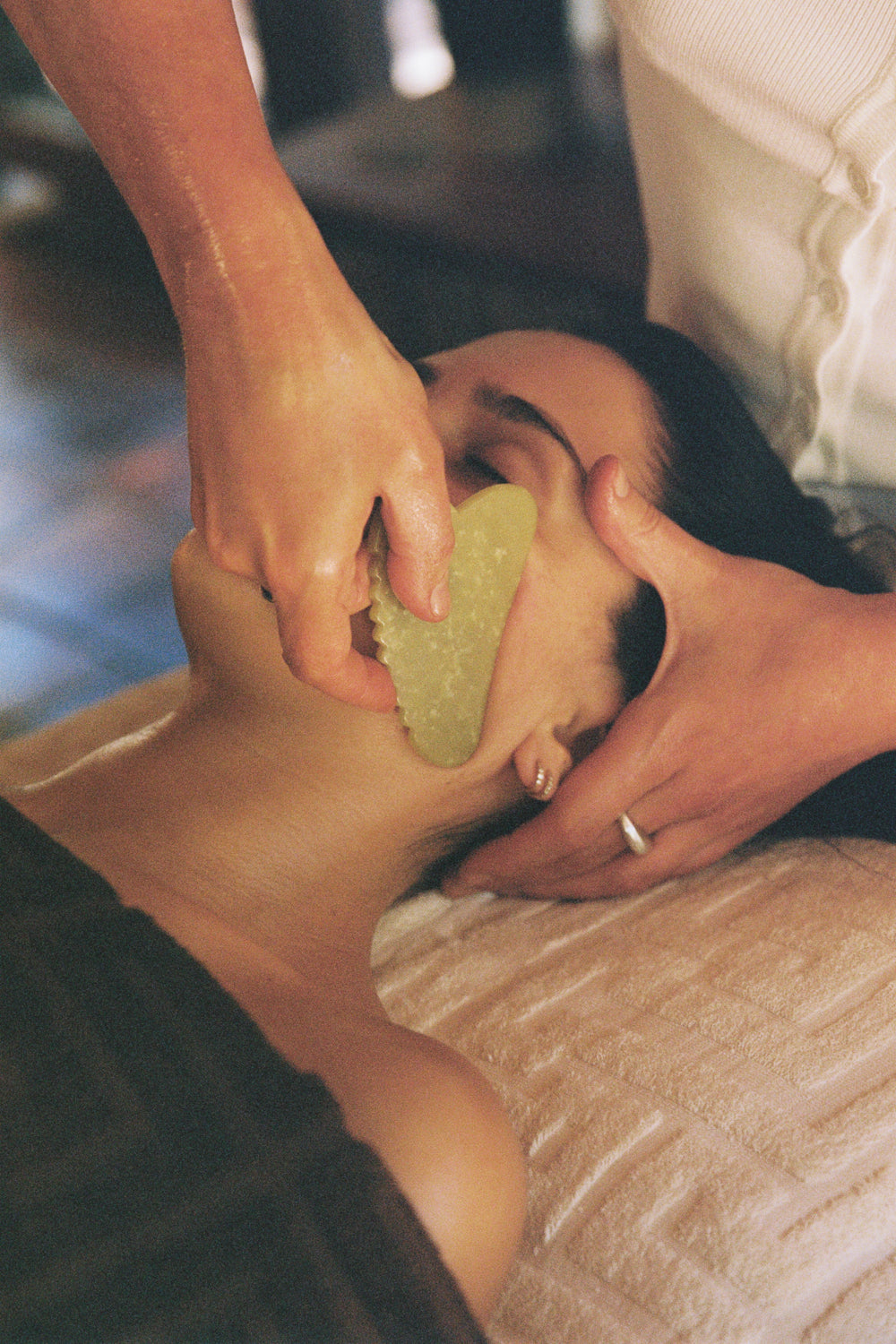
At Her Solis, lymphatic work sits inside a wider treatment philosophy. The skin is read in context: barrier function, jaw tension, breath, posture, tissue congestion, stress load and how the client feels in their body on the day. Some sessions stay mostly lymphatic. Others combine lymphatic drainage with TMJ work, buccal massage, facial cupping, gua sha or simply slower touch that helps the nervous system settle.
The face drains toward the jawline, sides of the neck and collarbone region. This is why the neck often matters before the cheeks.
How it works
The lymphatic system is a one-way network that helps return excess fluid, proteins and immune-related material back into circulation. It does not have a central pump like the heart. It depends on movement, breathing, pressure changes, tissue rhythm and the general state of the body.
In the head and neck, drainage pathways matter because the face can quickly look fuller or feel heavier when rhythm is disrupted. Sleep loss, long flights, allergies, inflammation, hormones, high salt intake, clenching, mouth breathing and stress can all change how the face feels. The body is already trying to regulate those shifts. Manual lymphatic work may support that process when performed gently and directionally.
The neck matters first. If tissue around the neck, jaw and collarbones feels guarded or under-mobilised, starting only on the cheeks can be incomplete. Her Solis usually begins by softening the neck, clavicle and lower jaw so the face has somewhere to drain toward before more detailed facial work begins.
Common reasons people book
This is the most common reason people seek lymphatic facial work. The goal is to support movement when the face feels swollen or slow, especially around the cheeks, jaw and under-eye region.
When the face feels full after travel, heat, alcohol, poor sleep or hormonal shifts, gentle directional work may support a lighter feeling without irritating the skin.
Lymphatic work can soften the surrounding tissue and make jaw-focused treatment easier to receive. It does not replace TMJ assessment, but it can be an important base layer.
Clients with clenching, grinding or cheek tightness often respond well to a combination of lymphatic opening and more specific jaw work. The treatment is adapted to tenderness and stability.
Mild facial congestion can feel more comfortable after slow work across the cheeks, jaw and neck. Persistent, painful or infectious sinus symptoms still require medical care.
Long flights, altered sleep and dehydration can leave the face puffy and dull. Lymphatic treatment may support a more refreshed feeling when paired with hydration and rest.
When the barrier is reactive, heavy stimulation is often the wrong choice. Light lymphatic touch may be more suitable than aggressive sculpting or exfoliation, depending on the skin.
The slowness of the work matters. Some of the benefit comes from repetitive, non-threatening touch that helps the body come out of a guarded state.
A face that feels fixed, swollen or compressed can sometimes feel more spacious after careful lymphatic and soft-tissue work through the cheeks, jaw, neck and temples.
Jaw and tension patterns
Jaw tension rarely exists in isolation. Clenching can involve the masseter, temporalis, tongue, neck, breath and the way stress is held through the body. When the lower face feels full or rigid, lymphatic work may help soften the surrounding landscape before more targeted TMJ or buccal techniques are introduced.
For some clients, this means the face feels less loaded before deeper jaw work begins. For others, it means a session remains gentle because the tissue is too reactive for more direct pressure on that day. Lymphatic drainage is often one of the most useful ways to begin when the jaw is tired, the face is puffy and the nervous system feels overrun.
If your main concern is clenching, clicking, locking, bite change or significant pain, the TMJ Facial or Buccal Facial may be the more specific treatment direction. Facial lymphatic drainage can still be part of that plan.

Skin and barrier
The skin barrier does not usually benefit from overwhelm. When the face is reactive, hot, inflamed or overworked, stronger sculpting language can be misleading. In those moments, gentle lymphatic work may be one of the more appropriate treatment paths because it can support movement without creating the same level of stimulation as more aggressive techniques.
This does not mean every sensitive skin client should have lymphatic massage, and it does not mean lymphatic work treats skin disease. It means that in some cases a slower, barrier-aware facial gives the skin and tissue a better chance to settle. Product choice matters too: lubrication, calm ingredients and a non-stripping approach are part of the treatment design.
If reactive skin is a major part of the picture, the session may stay simple. The aim is not to use every available tool. The aim is to choose what the skin can receive while still considering puffiness, tension and the way the face is holding stress.
Evidence informed
Current evidence for manual lymphatic drainage is strongest in lymphedema settings, where it is widely used as part of conservative care. That evidence cannot be copied directly onto every beauty or wellness claim, but it does support the basic idea that gentle, directional manual work can influence edema-related outcomes in some contexts.
Anatomical reviews of head and neck lymphatics help explain why facial treatment often needs to consider the jaw, side of the neck and lower drainage pathways rather than focusing only on the cheeks. Related research on massage and facial manipulation also suggests possible effects on blood flow, tissue mobility and perceived relaxation, though facial-specific evidence remains limited and more high-quality research is needed.
The most responsible framing is conservative. Facial lymphatic drainage may support puffiness, tissue comfort and the feeling of movement in the face for some people. It should not be described as a cure, a dramatic detox, or a replacement for medical, dental or dermatology care.
The appointment
Some clients notice a lighter, less puffy face immediately. For others the more important shift is a feeling of softness, rest or reduced facial holding. Results vary with sleep, hormones, travel, lifestyle and how long the issue has been present.

Suitability
Facial lymphatic drainage is generally gentle, but gentle does not mean appropriate in every situation. Active infection, fever, acute inflammation, unstable medical conditions, certain cancers, untreated cardiac issues, clotting risks, severe swelling of unclear cause, recent surgery, and some autoimmune or vascular concerns may require treatment changes or medical clearance.
Recent injectables, dental work, inflamed acne, rosacea flares, broken skin, cold sores and severe sinus pain also change what is sensible on the day. If swelling is sudden, one-sided, painful, or associated with illness, medical advice should come first.
Her Solis uses lymphatic work conservatively. If the face needs less stimulation, the treatment becomes quieter. If another modality is more appropriate, that is chosen instead.
Her Solis method
Lymphatic work is central to the Her Solis method because it creates a gentle way into the face. It can help the tissue become more receptive before more specific treatment is applied, and sometimes it is the treatment that makes the most sense on its own.
The broader philosophy is simple: work with the body, not against it. If the face is puffy, think about pathways and rhythm. If the jaw is tight, think about clenching, posture and load. If the skin is reactive, think about barrier respect before stimulation. Facial lymphatic drainage fits naturally within that kind of clinical restraint.
For many clients, lymphatic work is the bridge between aesthetics and regulation. The face may look fresher, but the deeper result is often that it feels less held.
Questions
It is a gentle style of manual treatment used to support fluid movement through the face, jaw, neck and collarbone region using light, directional strokes.
It may support puffiness, fluid heaviness, jaw tension, a sense of facial congestion and post-travel swelling for some people. Results vary.
It may help some people feel and look less puffy, especially when the neck and jaw pathways are prepared first.
No. It should feel light and calm. If treatment feels forceful or abrasive, it is not being performed in the style we use at Her Solis.
That depends on your treatment goals, lifestyle and how often puffiness or tension returns. Some people book as needed; others include it in regular facial care.
It may support the surrounding tissue and create a softer starting point for jaw-focused work. Significant TMJ symptoms usually need more targeted assessment and treatment.
No. Gua sha is a tool-based technique. Lymphatic facial drainage is usually hands-on and even gentler in pressure and pace.
No. Facial cupping uses gentle suction and movement with cups. Lymphatic drainage is manual, directional and usually lighter.
Yes. Lymphatic work often pairs well with TMJ and buccal treatments because it helps soften the broader tissue landscape first.
We avoid exaggerated detox language. The treatment may support natural fluid movement, but it should not be framed as forcing toxins out of the face.
It may temporarily reduce the appearance of puffiness for some people, but it does not remove fat or permanently reshape the face.
Sometimes, yes. Because the pressure is light, it may be more suitable than aggressive stimulation for some reactive skins, provided the skin is not acutely inflamed.
It depends on the type and level of inflammation. Active inflamed breakouts may need a calmer, barrier-focused approach.
Mild facial heaviness can sometimes feel more comfortable after treatment, but persistent or painful sinus symptoms need medical care.
Pregnancy should always be disclosed. Gentle treatment may be appropriate for some clients, but positioning and technique are adapted carefully.
People with active infection, unexplained swelling, certain unstable medical conditions, some recent surgeries, or contraindications identified during consultation may need treatment changes or medical clearance.
Recent injectables should always be disclosed. Timing depends on the area and the advice of your injector.
The lighter, less puffy feeling may be temporary and is influenced by sleep, stress, hormones, hydration, travel and daily habits.
Hydrate, avoid unnecessary overstimulation if you feel tender or tired, and allow the body time to settle. Aftercare should stay simple.
Her Solis offers lymphatic facial treatments in Currumbin Waters, welcoming clients from Currumbin, Palm Beach, Burleigh Heads, Tugun, Elanora, Robina, Varsity Lakes, Mermaid Beach and across the Gold Coast.
Gold Coast context
Her Solis is a private facial studio in Currumbin Waters built around calm, considered treatment. Lymphatic work is not treated as an isolated trend. It sits inside a method that also considers facial structure, jaw load, sensitive skin, the nervous system and how daily life is showing up in the face.
For clients searching for facial lymphatic drainage Gold Coast, lymphatic facial Currumbin, or facial massage for puffiness near Palm Beach or Burleigh Heads, the studio offers a quieter and more personalised alternative to one-size-fits-all treatment menus.
Clients travel from Currumbin, Palm Beach, Burleigh Heads, Tugun, Coolangatta, Elanora, Robina, Varsity Lakes, Mermaid Beach and across the Gold Coast for lymphatic facials, TMJ work, buccal facial treatment, facial cupping and natural barrier-supportive skincare.