Gua Sha
A smooth tool moves across lubricated skin. On the face, the pressure should be light, slow and non-dragging. Her Solis uses it for tissue awareness, jaw and neck work, and a calmer ritual rhythm. The home guide explains the safer boundary.


Treatment comparison
Both are tool-assisted facial techniques, but they are not interchangeable. Gua sha glides with directional pressure. Facial cupping lifts with gentle suction. The best choice depends on skin tolerance, puffiness, jaw tension, sensitivity and the kind of touch your face can receive well.
Quick answer
Gua sha uses a smooth tool over oiled skin. It may suit people who enjoy slow, directional pressure around the jaw, neck, cheeks or brow, especially when the goal is a calm home ritual or tissue awareness.
Facial cupping uses small silicone cups and light suction. It may suit some people who want a lifted, moving sensation around puffiness or facial heaviness, but it needs extra caution with sensitive, reactive, vascular or easily bruised skin. If puffiness is the main reason you are considering tools, read Gua Sha for Puffiness and Facial Cupping for Puffiness after this comparison.
For fluid-heavy or sensitive presentations, manual facial lymphatic drainage is often the gentler first step. For medical swelling, infection, sudden changes, severe pain or unexplained one-sided puffiness, medical advice comes first.
Decision table
| Question | Gua sha | Facial cupping | Often better first |
|---|---|---|---|
| Main sensation | Smooth gliding pressure. | Gentle lift and suction while moving. | Manual lymphatic drainage if the face feels sensitive or overloaded. |
| Puffiness | May support temporary movement when light and neck-aware. | May support some fluid-heavy patterns if skin is resilient. | Facial Puffiness Support if the cause is unclear. |
| Jaw tension | Useful around jaw, neck and temples for some clients. | Useful around cheeks, masseter and neck only when tissue is not tender or reactive. | Jaw Tension Support or TMJ-aware facial work. |
| Sensitive or reactive skin | Use very light pressure or skip the tool. | Often more caution because suction can aggravate fragile tissue. | Skin Barrier Repair or a calmer facial. |
| Home ritual | Easier for most people to keep gentle and controlled. Read Home Gua Sha before building a routine, use Gua Sha for Puffiness if puffiness is the main concern, and use Gua Sha for Jaw Tension if the jaw is the reason for tool work. | Requires more care with suction, movement and bruising risk. Read Facial Cupping for Puffiness for puffiness-specific suitability, and Home Facial Cupping before using cups outside the studio. | Simple hands-on massage if technique feels confusing. |
| Avoid when | Broken skin, infection, sunburn, bruising, fresh injectables, strong flushing, inflamed acne or rosacea flares. | All of the same, plus fragile capillaries, easy bruising or any tendency to hold cups still. | Seek professional advice if symptoms are painful, sudden, one-sided or medically unclear. |
This table is educational. It does not diagnose skin, lymphatic, dental, vascular or medical conditions.
How they differ
A smooth tool moves across lubricated skin. On the face, the pressure should be light, slow and non-dragging. Her Solis uses it for tissue awareness, jaw and neck work, and a calmer ritual rhythm. The home guide explains the safer boundary.
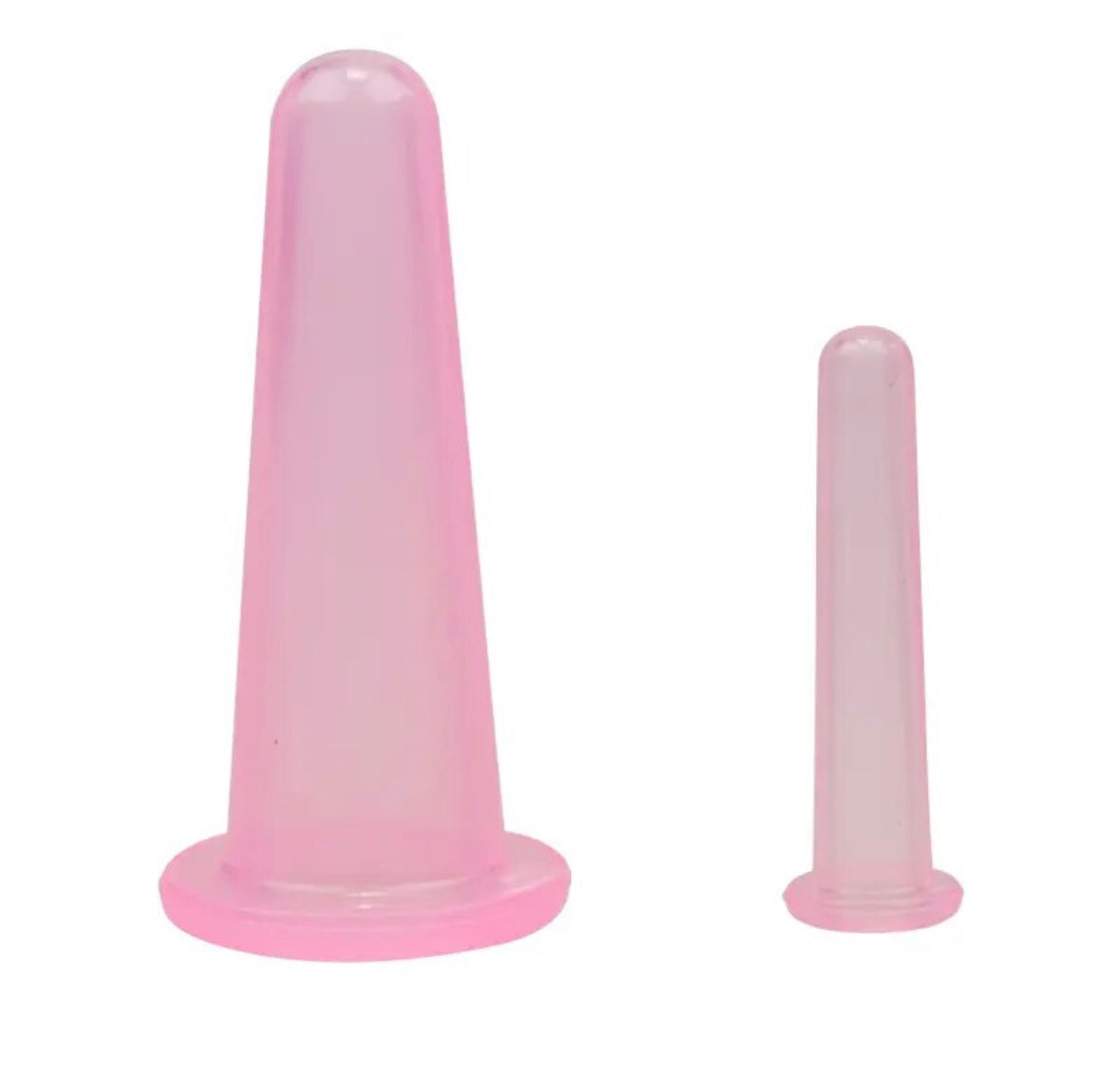
A soft cup creates negative pressure. On the face, it should keep moving and stay gentle. It can feel lifting, but bruising means the suction, hold time or technique was too strong. The home guide explains the safer boundary.
Manual lymphatic drainage is usually softer than both. When the face feels puffy, inflamed, tender or easily overwhelmed, this is often the most conservative starting point.
In studio
A treatment begins with the skin, tissue and nervous system in front of us. Recent injectables, skin flares, bruising, dental symptoms, pregnancy, medication, sensitivity, acne activity and the way the jaw feels that day all change the plan.
Some sessions use gua sha only. Some use facial cupping only. Some use both lightly. Some use neither, because the safer route is lymphatic drainage, buccal massage, TMJ-aware support, or a barrier-first facial.
The decision is practical: enough stimulation to support tissue comfort and fluid movement, not so much that the skin feels hot, dragged, marked or overworked.
Safety boundaries
Evidence and limits
Both gua sha and cupping have traditional histories, but facial-specific evidence is limited. The strongest responsible language is about possible support for circulation, tissue comfort, temporary puffiness appearance and relaxation for some people.
Gua sha research includes a small microcirculation study and broader low-quality clinical evidence in musculoskeletal contexts. Cupping research is broader, with mixed quality across pain studies and clear safety cautions around bruising, burns, infection risk and inappropriate technique.
Her Solis does not use either tool to promise detox, permanent sculpting, fat loss, wrinkle reversal, Botox replacement, TMJ disorder treatment, sinus treatment or medical lymphatic care.
Last reviewed: 4 July 2026. Author: Her Solis.
FAQs
Neither is automatically better. Gua sha may suit people who prefer gliding pressure. Facial cupping may suit some people who like a lifting sensation. Skin tolerance and treatment goals decide the safer option.
Manual lymphatic drainage is often the gentlest first step. Gua sha or facial cupping may be added when puffiness is cosmetic, the skin is suitable, and the technique stays light. Gua Sha for Puffiness explains the gliding-tool pathway, and Facial Cupping for Puffiness explains the suction-specific pathway.
Gua sha can work well around the jaw and neck when pressure stays light. Facial cupping may be used around the cheeks and masseter when tissue is not tender or reactive. Significant jaw symptoms should start with the Jaw Tension or TMJ guides, and the Gua Sha for Jaw Tension page explains the gliding-tool pathway.
Sometimes. Combining both increases stimulation, so Her Solis uses them selectively rather than automatically. Sensitive or reactive skin may need one tool or no tool work.
Often the lighter option is safest. For many sensitive skins, manual lymphatic drainage or hands-on facial massage is more appropriate than either tool.
No. They may temporarily change how puffiness or tissue softness appears, but they do not remove fat, change bone structure or permanently reshape the face.