Masseter awareness
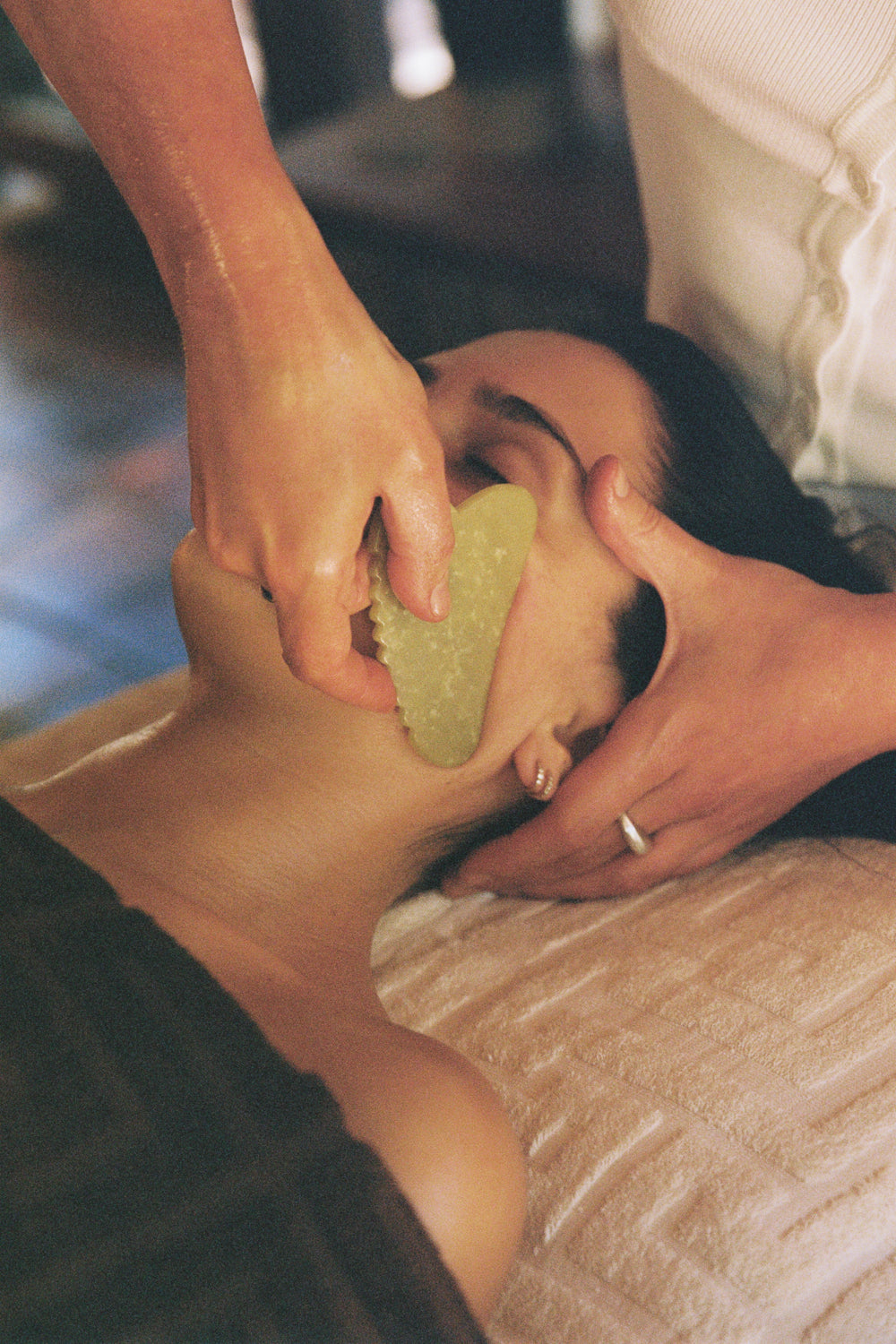
Light gliding around the lower cheek and jawline may help some clients notice holding patterns without forcing deep pressure into the jaw.


Gold Coast tool guide
A conservative guide to bruxism and jaw-tension questions: when light gua sha may support temporary jaw-area comfort, and when TMJ facial work, buccal massage or dental care should come first.
Her Solis does not use gua sha to treat TMJ disorder, stop grinding, fix a bite or diagnose jaw pain. It is a gentle tool option only when the skin and symptoms are suitable.
Quick answer
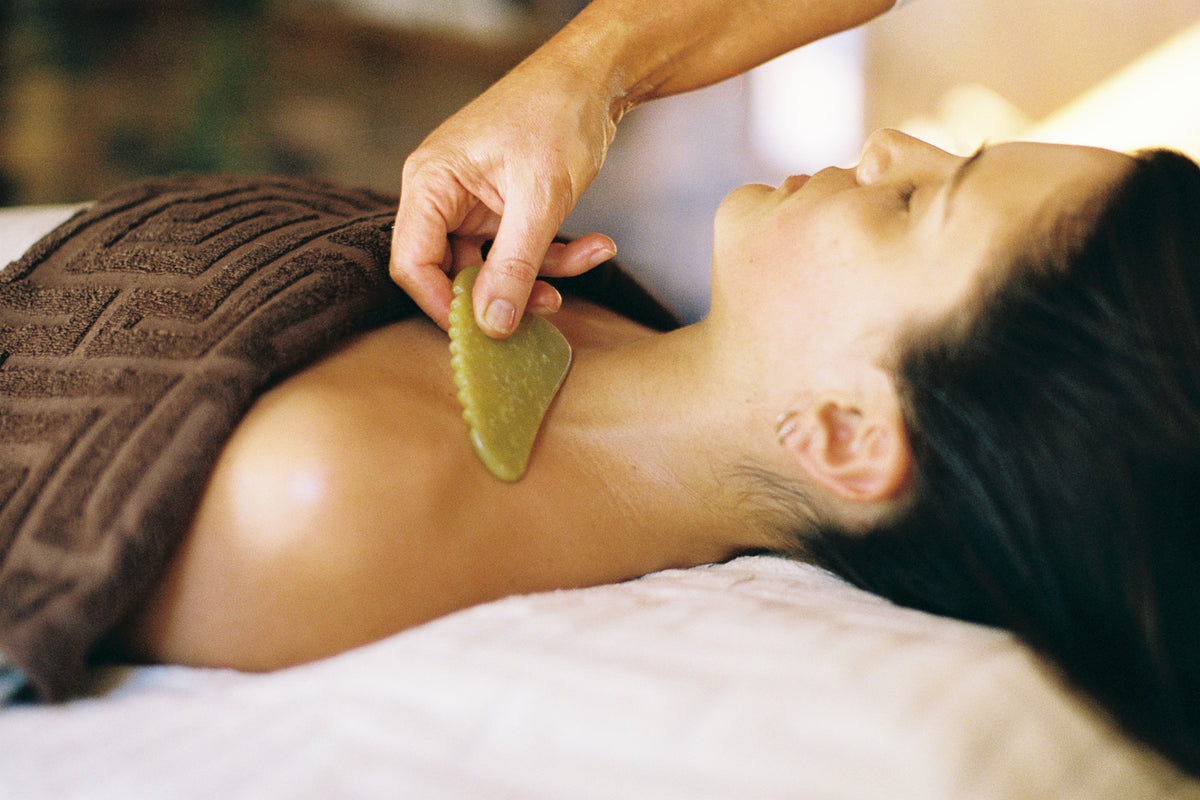
For some people, light tool-assisted glide around the neck, cheek and jawline can make the lower face feel softer and less held. The safest language is tissue comfort, massage rhythm, skin awareness and temporary softness, not structural correction.
If jaw symptoms include locking, bite change, sharp pain, dental pain, trauma, swelling, numbness, severe headaches or sudden change, gua sha should wait. Those patterns need dental, medical or allied-health assessment before facial tool work.
If clenching or jaw holding is the main concern, start with Jaw Tension Support, TMJ Facial Gold Coast, the Masseter Muscle guide and Temporalis Muscle guide. This page explains where gua sha may sit beside them.
When it fits
Light gliding around the lower cheek and jawline may help some clients notice holding patterns without forcing deep pressure into the jaw.
Gua sha often makes most sense when the neck, collarbone area and lower face all feel held, rather than when one painful point is the focus.
Some clients do not want intraoral work. Gua sha can sit inside a gentle external plan when buccal massage is not suitable or not preferred.
The skin needs to be calm, well-lubricated and tolerant of light glide. Rosacea flares, dermatitis, inflamed acne, bruising or recent procedures usually mean no tool.
When jaw holding comes with lower-face heaviness, compare this page with Gua Sha for Puffiness and Lymphatic Drainage for Puffy Face.
If you own a tool, read Home Gua Sha first. At-home jawline work should stay light, slow and occasional.
Choosing the right pathway
If you are still comparing modalities, use Gua Sha vs Facial Cupping for tool choice and Buccal Massage vs TMJ Facial for deeper jaw and cheek support.
| Pattern | Usually start with | Why |
|---|---|---|
| Mild jawline holding with calm skin | Light gua sha or external manual work | The goal is comfort and slow sensory feedback, not release intensity. |
| Clenching, grinding, masseter tightness or temple pressure | TMJ Facial Gold Coast | The broader TMJ-aware pathway can include jaw, neck, temple, lymphatic and nervous-system pacing. |
| Deep cheek restriction or intraoral cheek tension | Buccal Massage Gold Coast | Buccal work is more specific and needs consent, hygiene, pressure and contraindication screening. |
| Jaw heaviness plus suction curiosity | Facial Cupping for TMJ and Jaw Tension | Suction carries different bruising, vascular and skin-barrier considerations from a gliding tool. |
| Locking, bite change, trauma, dental symptoms or acute pain | Dental, medical or allied-health assessment first | These patterns sit outside cosmetic or complementary facial-treatment claims. |
Treatment sequencing
Jaw locking, bite change, dental infection signs, numbness, trauma, swelling, severe pain or unexplained headaches need appropriate advice before facial treatment.
Jaw holding rarely sits in one small point. Slow neck, collarbone, cheek and temple work often comes before any tool edge reaches the jawline.
Facial gua sha should glide. Dragging, scraping, bruising, strong redness, heat, stinging or sharp tenderness means the technique is too much.
Some clients need Signature TMJ Facial, some need Buccal Lymphatic Facial, and some need a barrier-first facial with no tool use.
Gold Coast context
Her Solis is based in Currumbin Waters on the Gold Coast. Clients visit for gua sha, TMJ-aware facial support, buccal massage, lymphatic facials, facial cupping and calmer barrier-aware skincare.
For clients searching for gua sha for jaw tension Gold Coast, jawline massage Currumbin, gua sha for clenching near Palm Beach or tool-assisted facial massage near Burleigh Heads, this page explains when gentle tool work may fit and when it should step aside.
Evidence and limits
Traditional practice describes gua sha as tool-assisted movement over lubricated skin. Modern facial use should be far gentler than body scraping, especially around the jaw, neck and face.
Research on gua sha includes microcirculation and musculoskeletal pain studies, including neck-pain research, but the evidence is not strong enough to claim that facial gua sha treats TMJ disorder, bruxism, headaches, bite mechanics or dental pain. Broader manual-therapy literature may support conservative jaw-care context, but gua sha should remain an optional complementary tool.
FAQs
It may support a temporary feeling of softness or comfort around the jaw and neck for some people when pressure is light and symptoms are mild. It does not treat TMJ disorder or replace dental assessment.
Not automatically. Gua sha is external and light. Buccal massage is more specific and may involve intraoral cheek work. The right option depends on symptoms, consent, skin tolerance and contraindications.
Only gently around the lower cheek and jawline, never as deep scraping or painful pressure. Significant masseter pain, clenching, bite change or dental symptoms should be assessed properly.
No. Gua sha does not stop or treat bruxism, correct bite mechanics or manage sleep-related grinding. It may be part of a calming ritual for some people, but dental or medical advice may be needed.
Avoid it with jaw locking, bite change, acute pain, dental infection symptoms, swelling, trauma, numbness, severe headaches, recent injectables, bruising, active skin inflammation or unclear medical symptoms.