Clenching
Daytime or sleep-related clenching can make the jaw feel dense, tired or tender. Dental input matters if tooth wear, pain or bite change is involved.


Science and anatomy
A conservative guide to the masseter muscle, why it can feel dense or overworked with clenching, and how Her Solis uses this anatomy without claiming to treat TMJ disorders.
Quick answer
The masseter sits over the side of the jaw, running from the cheekbone region toward the lower jaw. Anatomy references describe it as one of the muscles of mastication, working with the temporalis and pterygoid muscles to move the mandible for chewing, clenching and biting.
For Her Solis clients, the masseter matters because it is often where people feel jaw effort: dense cheeks, morning tightness, tenderness at the angle of the jaw, or the sense that the lower face is always switched on.
This page supports the TMJ Facial Gold Coast, Jaw Tension Support, Buccal Massage Gold Coast, Buccal Massage vs TMJ Facial and Facial Cupping for TMJ and Jaw Tension guides. It is educational only and does not replace dental, medical, physiotherapy or allied health care.
Anatomy map
Current anatomy references describe the masseter as a rectangular chewing muscle with layered fibres. It attaches around the zygomatic arch and the outer surface of the mandibular ramus and angle. Its main action is elevation of the mandible, or closing the jaw.
That does not mean every tight masseter is a cosmetic problem or a massage problem. The muscle sits inside a larger system that includes the temporomandibular joints, teeth, bite, tongue, temporalis and temple tension, neck, breathing, sleep and stress load.
This is not a diagnostic diagram. It shows why Her Solis considers the cheek, jaw, temples and neck together instead of treating the masseter as an isolated cosmetic target.
Common patterns
Daytime or sleep-related clenching can make the jaw feel dense, tired or tender. Dental input matters if tooth wear, pain or bite change is involved.
Bruxism involves repetitive jaw-muscle activity. Facial work may support comfort for some people, but it cannot diagnose or stop grinding patterns on its own.
Some clients describe the lower face as heavy or bulky. That can involve muscular guarding, fluid heaviness, stress load or several factors at once.
When the deep cheek feels loaded, buccal massage may be considered, but only with clear consent and suitable tissue conditions.
Masseter tenderness can sit alongside temple pressure, joint clicking, locking or bite changes. Those patterns need the broader TMJ guide, the paired Temporalis guide and sometimes clinical assessment.
Some jaw holding increases when sleep, stress or body tension are high. The Nervous System and Skin guide explains that wider context.
Treatment logic
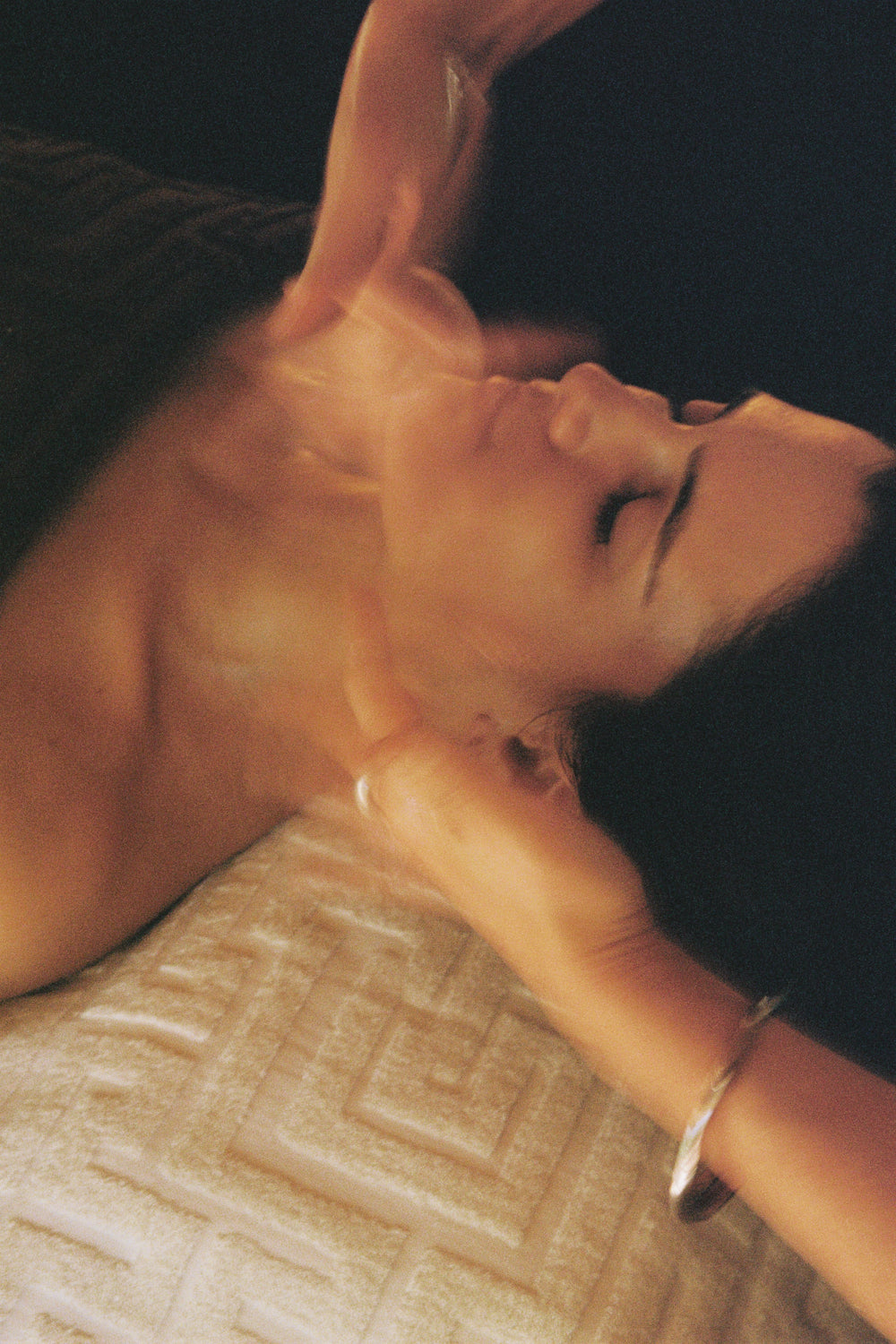
A dense or tender masseter does not automatically need deeper pressure. In some people, stronger work can feel useful. In others, it can increase guarding or irritate a sensitive jaw system.
Her Solis usually reads the masseter alongside the temples, neck, lymphatic heaviness, skin sensitivity and how reactive the jaw feels that day. The session may begin with slower external work, facial lymphatic drainage, neck and collarbone support, or the wider Jaw Tension Support pathway before more direct cheek work is considered.
If intraoral work is suitable, the Buccal Massage Gold Coast guide explains the consent, pacing and contraindication boundaries. If the symptoms are broader than muscular tightness, the TMJ Facial Gold Coast guide is the safer starting point. If suction is being considered around the cheek and jaw, Facial Cupping for TMJ and Jaw Tension explains when that should be softened or avoided.
Safety boundaries
Evidence and limits
Anatomy sources clearly support the role of the masseter in jaw closing and chewing. Clinical sources also recognise that temporomandibular disorders can involve the jaw joint and the muscles that control jaw movement.
That is different from proving that a facial treatment can treat TMD, bruxism, headaches or bite issues. Her Solis uses masseter anatomy to guide conservative, comfort-focused facial work, not to make diagnostic or curative claims.
Last reviewed: 4 July 2026. Author: Her Solis.
FAQs
The masseter is one of the main chewing muscles. It helps close the jaw and contributes to biting and clenching actions.
Gentle facial work may help some people feel softer or more comfortable through the jaw and cheek, but it should not be described as curing TMD, bruxism or jaw pain.
No. Masseter tension can be one part of a jaw-tension pattern, but temporomandibular disorders are broader and may involve joints, muscles, discs, dental factors and pain sensitivity.
Buccal massage may be relevant when deeper cheek and jaw tissue needs more specific work and intraoral contact is suitable, consented and not contraindicated.
No. Her Solis provides complementary facial support and education. Persistent, severe, changing or function-limiting symptoms should be assessed by an appropriate dental or medical practitioner.