Jaw Clenching
Clenching can leave the masseter and cheeks feeling dense, tired or tender. Gentle release may help some people feel less compressed through the lower face.


Currumbin Waters studio
A complementary facial treatment direction for jaw tension, clenching, facial tightness, temple load and the broader stress patterns that can gather through the face, neck and nervous system.
At Her Solis, TMJ-focused facial work is never positioned as dental treatment or a cure for temporomandibular disorders. It is careful soft-tissue support designed to help some people feel less guarded, less held and more comfortable in the face.
The treatment
A TMJ facial is a facial treatment shaped around jaw-related tension rather than surface skin change alone. The work may include the cheeks, jawline, temples, neck, scalp, collarbones and, when appropriate and consented, intraoral or buccal support through the cheeks.
People usually search for a TMJ facial when clenching, grinding, morning tightness, cheek soreness, temple pressure or a feeling of facial fatigue has become familiar. Some also notice the face feels bulky, puffy or rigid because the surrounding tissue stays on guard for long periods.
At Her Solis, the session is built around the whole picture: jaw load, stress patterns, sleep, posture, breath, facial mobility, tissue tenderness, skin sensitivity and how much direct work the body can actually receive that day. Some sessions stay gentle and external. Others combine lymphatic drainage, buccal massage, facial cupping or ear seeds when those tools make sense. For the symptom-led overview before choosing a modality, read Jaw Tension Support. If you are deciding between intraoral cheek work and the broader jaw pathway, read Buccal Massage vs TMJ Facial. For the wider treatment map above the modality pages, see Holistic Facials Australia.
Jaw-related symptoms rarely sit in the joint alone. The masseter, temporalis, tongue, neck and stress response often shape how the face feels.
The wider pattern
The temporomandibular joint is only one part of the picture. Many people who feel tight through the jaw also hold through the masseter, temples, side of the neck, tongue and upper chest. Mouth breathing, desk posture, sleep disruption, stress load, dental history and pain sensitivity can all shape the way the face behaves. Our Jaw Tension Support guide explains that symptom pattern before it becomes a treatment decision, the Masseter Muscle and Jaw Tension guide explains the cheek-jaw anatomy, the Temporalis Muscle and Jaw Tension guide explains temple-side jaw anatomy, and our Nervous System and Skin guide explains why that broader load often shows up in both the jaw and the skin.
This is why a TMJ facial does not begin with aggressive pressure straight into a sore area. Often the best starting point is slower work through the neck, clavicles, cheeks, temples and breath-related holding patterns so the jaw has somewhere safer to soften into.
If your jaw clicks, locks, deviates, changes the bite, wakes you with severe pain or has sudden functional change, that needs dental or medical assessment first. A TMJ facial can still be part of your support plan, but it should not replace diagnosis.
Common reasons people book
Clenching can leave the masseter and cheeks feeling dense, tired or tender. Gentle release may help some people feel less compressed through the lower face.
Night grinding often shows up as morning tightness or temple fatigue. Facial work cannot stop grinding on its own, but it may support comfort around the surrounding soft tissue.
The temporalis is often part of the story when jaw tension and headaches overlap. Slower facial work may help reduce the sense of constant holding there for some clients.
When the lower face feels swollen, puffy or rigid, TMJ support may begin with gentle facial lymphatic drainage rather than deep pressure.
Some people hold their day in their face. Repetitive, non-threatening touch may help the body move out of a more guarded state.
When suitable, buccal work may offer a more specific route into deep cheek and jaw tension than external facial work alone. Our Buccal Massage Gold Coast guide explains when that extra specificity is useful.
Jaw symptoms often coexist with tight necks, elevated shoulders and shallow breathing. Treatment can acknowledge those relationships even when the appointment is facial.
Some clients use TMJ facial work between dental, physio, osteo or other care as complementary support rather than as a standalone solution.
Part of the value is the pace. Sometimes the most useful shift is not dramatic release, but a face that feels less defended and a body that can rest more easily.
Technique choices
The TMJ page exists inside a wider Her Solis treatment system. If the lower face feels puffy, hot or overloaded, a session may begin with facial lymphatic drainage to create more softness before direct jaw work starts. If puffiness is the main concern, Facial Puffiness Support explains the red flags and pathway choice. If the cheeks and masseter need deeper specificity, the Buccal Massage Gold Coast guide explains when intraoral work may be the more precise fit.
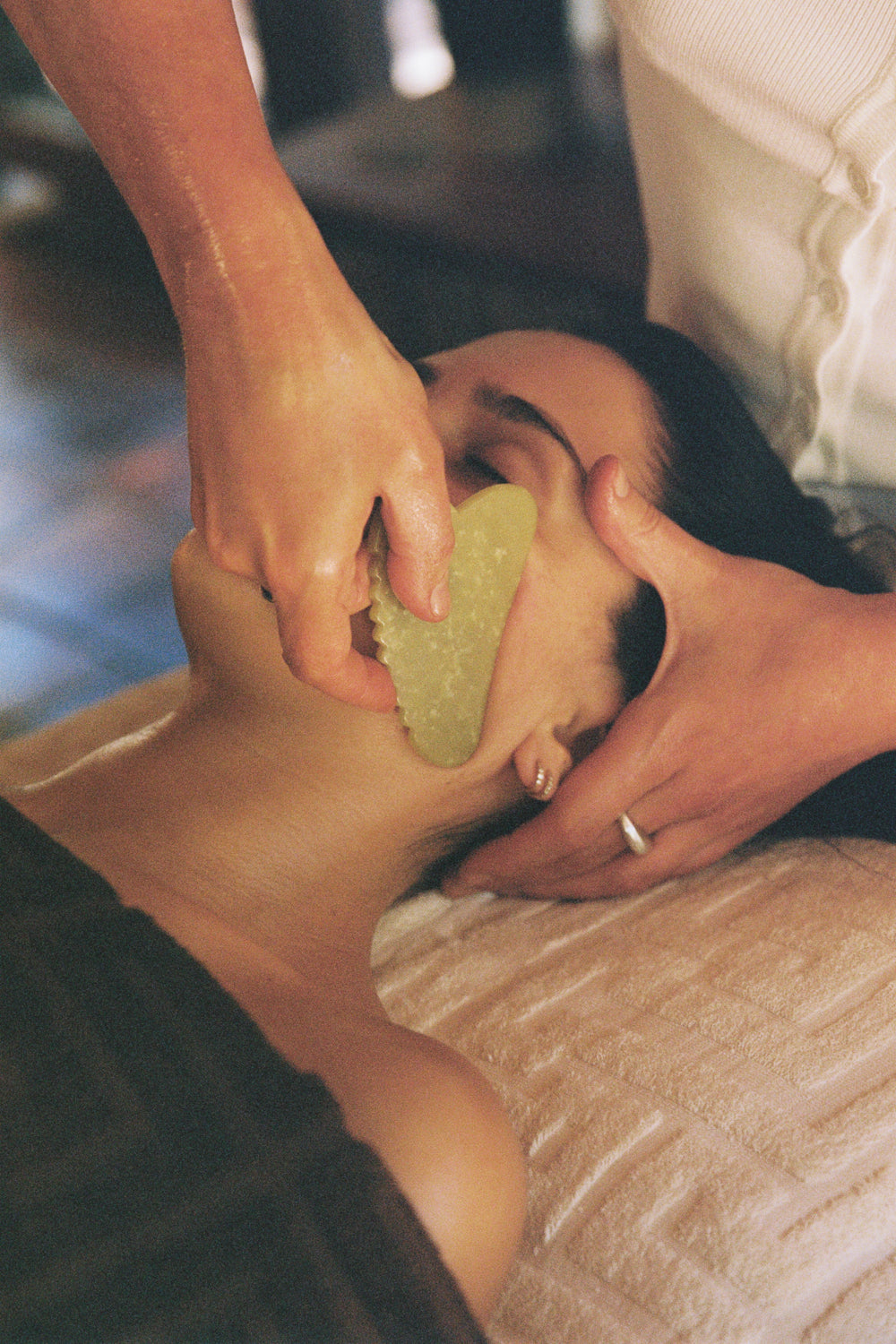
Facial cupping can also support surrounding tissue mobility around the cheeks, temples and neck when the skin and tenderness level allow for it. It is used conservatively and not over inflamed or unstable tissue. The cup-specific suitability page is Facial Cupping for TMJ and Jaw Tension.
For clients who notice jaw clenching rises with stress, Ear Seeds for TMJ explains how ear seeds may complement hands-on work by giving a small ritual anchor between appointments. None of these tools are mandatory. The point is not to use everything. The point is to choose what the body can receive.
Evidence informed
Current evidence around temporomandibular disorder management generally supports conservative care first. Education, self-management, jaw exercises, behavioural support and appropriate referral are common themes across guidance. Research also suggests exercise and some manual approaches may help some people with pain or jaw function, but certainty is often low and results vary.
That matters because a branded facial service should not borrow the strongest possible language from broader TMD care. The responsible claim is narrower: TMJ-focused facial work may support comfort, body awareness, tissue softness and relaxation for some people, especially when jaw tension is stress-related or muscular. It should not be presented as fixing bite issues, replacing splints, or resolving every temporomandibular disorder presentation.
More high-quality research is still needed, particularly on which combinations of manual care, exercise, education and self-management work best for different TMD subtypes. This is why Her Solis keeps the framing conservative and encourages dental or medical review where symptoms are persistent, severe or changing.
The appointment
Some people feel immediate softness or easier mouth movement. Others mainly notice the face feels less effortful, less full or less defended. Response varies with underlying diagnosis, stress load, sleep, dental factors and how long the pattern has been present.

Suitability
A TMJ facial may not be appropriate when symptoms suggest the need for diagnosis or more formal assessment first. Clicking with pain, locking, trauma, sudden bite change, marked restriction in opening, infection, severe headaches of unclear cause, one-sided facial swelling or acute dental pain should not be handled as routine facial tension alone.
Some clients also need a different pace because the jaw is highly reactive, the nervous system is sensitised, or the skin is too inflamed for direct work. In those cases the session may stay lighter, may pivot toward lymphatic or nervous-system support, or may be deferred entirely.
Her Solis works best as complementary support. Persistent TMJ symptoms, suspected disc issues, bruxism-related tooth damage, significant headaches and facial pain that disrupt daily life deserve dental, GP, physiotherapy or other appropriate professional input as well.
Gold Coast context
Her Solis is a private studio in Currumbin Waters where facial work is approached as part of the whole body. Jaw tension is considered alongside lymphatic flow, facial structure, nervous-system load, sleep, skin sensitivity and the pace of daily life.
For clients searching for TMJ facial Gold Coast, jaw tension facial Currumbin, clenching support near Palm Beach or buccal massage for the jaw near Burleigh Heads, the studio offers a slower and more personalised alternative to treatment menus built around quick turnover.
Clients travel from Currumbin, Palm Beach, Burleigh Heads, Tugun, Coolangatta, Elanora, Robina, Varsity Lakes, Mermaid Beach and across the Gold Coast for TMJ facial work, buccal massage, facial lymphatic drainage, ear seeds and calm barrier-aware skincare support.
Questions
It is a facial treatment shaped around jaw tension, clenching, cheek tightness, temple load and surrounding soft tissue support rather than only surface skin results.
No. It may provide complementary support for some people, but it does not diagnose or treat every temporomandibular disorder presentation and should not replace dental or medical care.
It may help some people feel less guarded and more comfortable through the jaw, cheeks, temples and neck, especially when tension is muscular or stress-related.
No. Buccal massage is one technique that may sit inside a broader TMJ plan. Some TMJ sessions stay entirely external and gentler.
No. Intraoral or buccal work is only used when it is suitable, clearly explained and consented. It is not mandatory for a useful TMJ-focused facial.
Sometimes. If the lower face feels full, fluid-heavy or reactive, a lymphatic-first approach may be more comfortable before direct jaw work.
Sometimes. Facial cupping may support surrounding soft tissue release around the cheeks, temples and neck when the skin and tenderness level make it appropriate. It does not treat TMJ disorder; read Facial Cupping for TMJ and Jaw Tension for the safety boundary.
They may support awareness and relaxation for some people, especially when clenching rises with stress, but they do not replace dental assessment or treatment. Read Ear Seeds for TMJ for the jaw-specific safety boundary.
Clicking, locking, bite change or significant pain should be assessed by a dentist or appropriate health professional. Facial work may still be complementary, but it should not be the only plan.
It may help some tension-related patterns around the temples, jaw and neck, but headaches have many causes and persistent or severe symptoms need appropriate assessment.
No. The work may meet tenderness, but it should not feel aggressive or forceful. Pressure is adapted to how the tissue responds on the day.
That depends on symptom pattern, treatment goals and what else is part of your care. Some people book as needed, while others include it in a broader maintenance rhythm.
Recent dental work should always be disclosed. Timing depends on what was done, how the jaw feels and whether the area is still irritated or unstable.
Recent injectables should be disclosed. The timing and intensity of facial work may need to change based on the area treated and your injector's advice.
Her Solis offers TMJ-focused facial treatments in Currumbin Waters, welcoming clients from Currumbin, Palm Beach, Burleigh Heads, Tugun, Elanora, Robina, Varsity Lakes, Mermaid Beach and across the Gold Coast.