Calm skin
Skip gua sha over sunburn, broken skin, bruising, rash, cold sores, inflamed acne, dermatitis flares, rosacea flares or skin that already feels hot and reactive.


Home ritual guide
Gua sha at home should feel slow, gliding and controlled. This guide explains pressure, slip, hygiene, sensitive-skin boundaries, injectables and when to choose hands, lymphatic work or no tool instead.
Quick answer
Home gua sha is not a scraping challenge, detox routine, face-slimming method or shortcut to permanent sculpting. On the face, the pressure should be much lighter than body gua sha and the goal should be comfort, tissue awareness and a calmer ritual.
Use a facial oil or balm your skin already tolerates, keep the tool almost flat, move slowly, and stop if the skin drags, stings, flushes strongly, feels hot or becomes tender. More pressure does not mean better results.
If your main concern is puffiness, start with Facial Puffiness Support and the symptom-specific Gua Sha for Puffiness guide. Sudden, painful, one-sided, dental, allergic or persistent swelling is not a home-tool problem and needs appropriate advice.
Before you begin
Skip gua sha over sunburn, broken skin, bruising, rash, cold sores, inflamed acne, dermatitis flares, rosacea flares or skin that already feels hot and reactive.
Use a simple facial oil or balm that lets the tool glide without pulling. Avoid exfoliating acids, retinoids, strong actives or irritating essential oils before the ritual.
Clean the tool before and after use. Do not use a chipped, cracked or rough-edged tool. Do not share tools without proper cleaning.
Simple method
| Step | How to keep it gentle | Stop if |
|---|---|---|
| 1. Prepare | Cleanse, apply enough oil or balm, and check the tool edge is smooth and clean. | The skin is hot, broken, bruised, inflamed, sunburnt or irritated before you start. |
| 2. Begin at neck and collarbone | Use light downward and outward strokes with the tool almost flat. Avoid strong pressure over the throat. | The sensation feels sharp, dizzying, tender or uncomfortable. |
| 3. Move through jaw and cheeks | Glide outward slowly. Support the skin with the other hand where needed so the tool does not pull. | The skin drags, turns hot, stings or becomes deeply red. |
| 4. Treat the eye area as delicate | Use feather-light pressure around the brow bone only, or skip this area and use hands instead. | The skin is thin, crepey, vascular, tender, irritated or recently treated. |
| 5. Finish quietly | Let the skin settle. Avoid exfoliants, retinoids, heat and intense exercise if the face feels warm. | The face feels tight, bruised, tender or sensitised after the ritual. |
For most suitable skin, two to three short sessions a week is plenty. Sensitive skin may need less, and inflamed skin may need no tool at all.
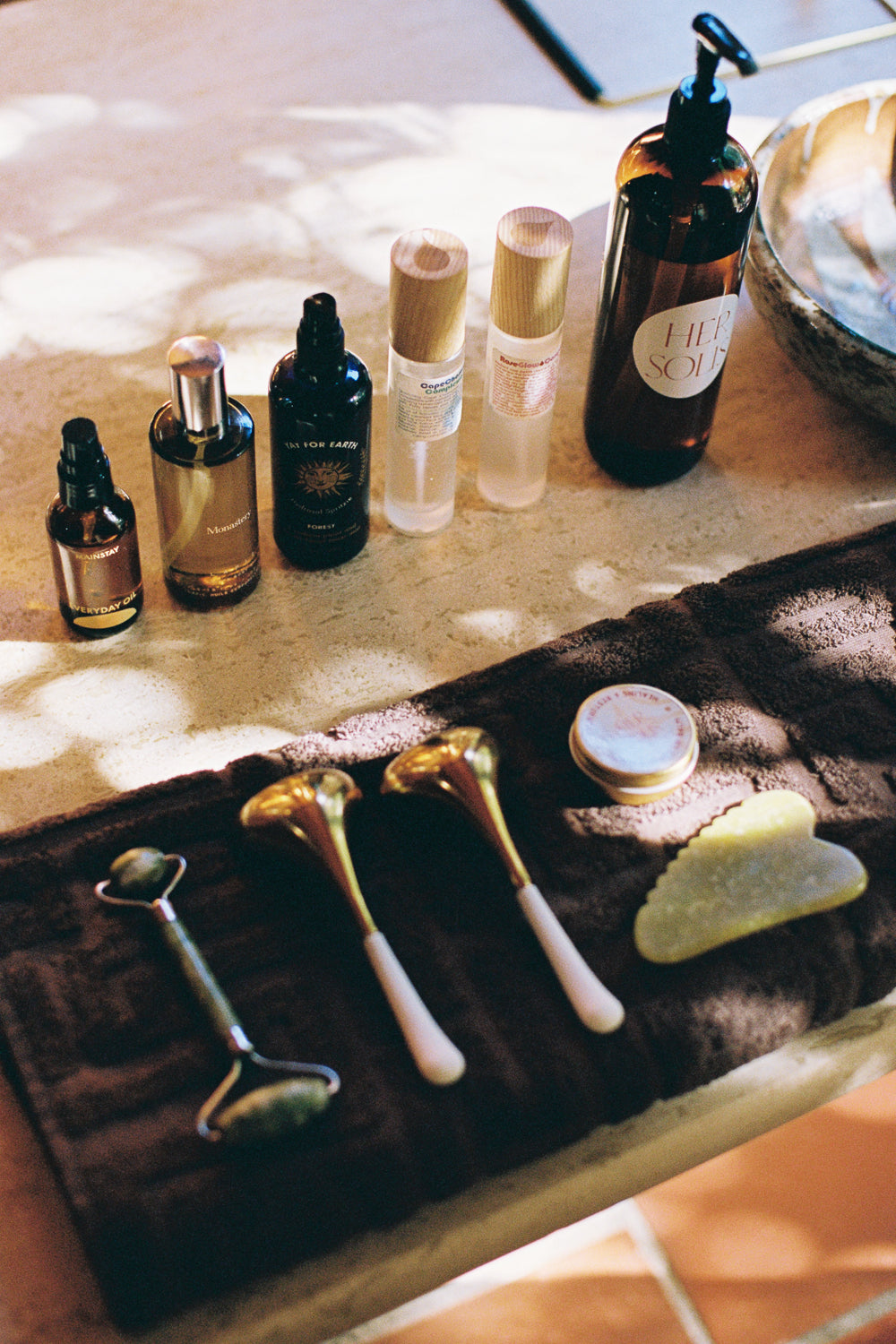
How to choose
If the skin is calm and you like directional pressure, gua sha may be easier to control than suction. If your face feels puffy but sensitive, manual facial lymphatic drainage may be a quieter starting point.
If you are deciding between gua sha and cups, read Gua Sha vs Facial Cupping. The Home Facial Cupping guide explains why suction carries a different bruising and marking risk.
If jaw tension is the reason you are using the tool, start with Jaw Tension Support and the symptom-specific Gua Sha for Jaw Tension guide. Significant pain, locking, bite change, trauma, headaches or dental symptoms should not be managed with a home facial tool.
Avoid or pause
Evidence and limits
Gua sha has traditional roots, but facial-specific evidence remains limited. A small study reported increased local surface microcirculation after gua sha, while a systematic review summary on musculoskeletal pain concluded that the available controlled-trial evidence was insufficient and often low quality.
A dermatology review discusses gua sha, jade rollers and facial massage as popular practices, but this does not prove permanent sculpting, fat reduction, wrinkle reversal, detoxification or treatment of skin disease. Her Solis keeps home guidance conservative because facial skin is visible, delicate and often reactive.
Use home gua sha as a gentle ritual only. It does not replace dermatology care, dental care, medical assessment, injectable aftercare instructions or professional treatment planning.
Questions
Two to three short sessions a week is enough for most suitable skin. Sensitive, reactive or easily marked skin may need less, and inflamed skin should avoid tool work.
No. Facial gua sha should not leave strong red marks, bruising or petechiae. Those signs usually mean the pressure was too strong or the skin was not suitable that day.
No. Gua sha may temporarily change the look of puffiness or tissue softness for some people, but it does not remove fat or permanently reshape the face.
It may temporarily support the appearance or feeling of mild cosmetic puffiness for some people. The Gua Sha for Puffiness guide explains the safer symptom-specific pathway. Sudden, painful, one-sided or persistent swelling needs medical or dental advice.
Some people enjoy light tool work around the jaw and neck. It does not treat TMJ disorder and should not replace dental or medical assessment for significant symptoms. Read the Gua Sha for Jaw Tension guide before using a tool for jaw-area holding.
Use a facial oil or balm your skin already tolerates and that gives enough slip. Avoid exfoliating acids, retinoids, strong essential oils or products that make the skin feel hot.
Do not use gua sha over recent injectables. Timing depends on the area, product and injector guidance. Follow your injector's aftercare instructions first.
Sometimes, but often it needs to be reduced or skipped, especially during flares. Barrier support, calming skincare, manual lymphatic work or no tool may be more appropriate.
Neither is automatically better. Gua sha uses gliding pressure and facial cupping uses suction. Read the comparison guide if you are deciding between the two.
Keep the skin calm. Avoid exfoliants, retinoids, heat and intense exercise if the skin feels warm or sensitised. Use simple barrier-supportive skincare.
Next step
The Her Solis approach is to keep home tools calm and skin-respectful. If you want a tool, start with the Jade Gua-sha. If you want the treatment context first, read Gua Sha Facial Gold Coast. If you are not sure whether gua sha is right for your skin, book a facial or ask before using it.