Stinging Products
Products that used to feel neutral may suddenly burn, tingle or feel sharp on contact.


Gold Coast skin education
A conservative guide for people dealing with reactive, tight, hot, stingy or overworked skin and trying to understand what barrier repair actually means before buying more products or booking stronger treatment.

Barrier basics
The skin barrier is the outer protective system that helps the face hold water, tolerate the environment and defend itself against irritation. When that barrier is struggling, skin may feel tight, hot, flaky, stingy, unexpectedly oily, or unable to tolerate products that once felt fine.
Barrier repair is not one miracle product and it is not a promise to cure every skin condition. In practice, it usually means reducing unnecessary irritation, supporting hydration, respecting inflammation, using gentler product layers, and giving the skin fewer things to fight at once.
At Her Solis, barrier repair is treated as a decision-making framework rather than a trend phrase. It influences how we choose cleansing, pressure, exfoliation, oils, massage, heat, tools and aftercare. If the skin has become stingy, tight or suddenly intolerant after actives, scrubs or treatments, start with Over-Exfoliated Skin Recovery. If you are deciding whether the barrier or microbiome is the more useful starting point, read Skin Barrier vs Skin Microbiome. The Skin Microbiome guide explains the evidence limits around skin ecology, barrier function and gut-skin claims. If your skin feels reactive but you want the more symptom-led explanation first, read Sensitive Skin Barrier Support. If stress, poor sleep or facial holding seem to lower your skin tolerance, Stress and Skin Reactivity explains that bridge without treating stress as the whole cause. If you are trying to understand calming ingredients rather than add another active, Calendula for Sensitive Skin explains botanical evidence and allergy limits, Chamomile for Reactive Skin explains a familiar botanical with plant-family caution, Blue Tansy for Sensitive Skin explains essential-oil tolerance and fragrance boundaries, and Bisabolol for Skin Barrier explains calming formula context without treating one ingredient as a repair cure. If you are comparing lipid-rich barrier-supportive formulas, Sea Buckthorn for Skin Barrier explains the oil chemistry, formula context and claim limits. If acne-prone skin is becoming tight, stripped or irritated, read Acne and Skin Barrier Support. If redness, flushing or a rosacea diagnosis is part of the picture, continue to Rosacea Sensitive Skin Support. If a rash around the mouth, nose or eyes is the concern, read Perioral Dermatitis Support before booking. If facial puffiness is also present, Facial Puffiness Support helps separate cosmetic heaviness from swelling red flags, and our Facial Lymphatic Drainage Gold Coast guide explains when a lighter manual approach may make more sense than pushing the skin harder.
Common signs
Products that used to feel neutral may suddenly burn, tingle or feel sharp on contact.
Skin can feel dehydrated and overactive at the same time, especially after stripping cleansers or over-exfoliation.
Redness, heat or fast-reacting skin may suggest the routine or treatment pace is too aggressive.
Multiple acids, scrubs, actives, strong massage or constant product switching can push the skin past tolerance.
Her Solis approach
Barrier repair at Her Solis usually begins with subtraction. Before adding more, we look at what may be overwhelming the skin: repeated exfoliation, fast product rotation, too much stimulation, fragranced or active-heavy layering, heat, over-cleansing, stress load, poor sleep, travel, or a face that is already holding inflammation.
That is why the barrier conversation belongs inside the wider Holistic Facials Australia guide. The skin is not read in isolation. Tissue tension, puffiness, jaw load, nervous system state, product tolerance and recent skin history all change what is sensible on the day.
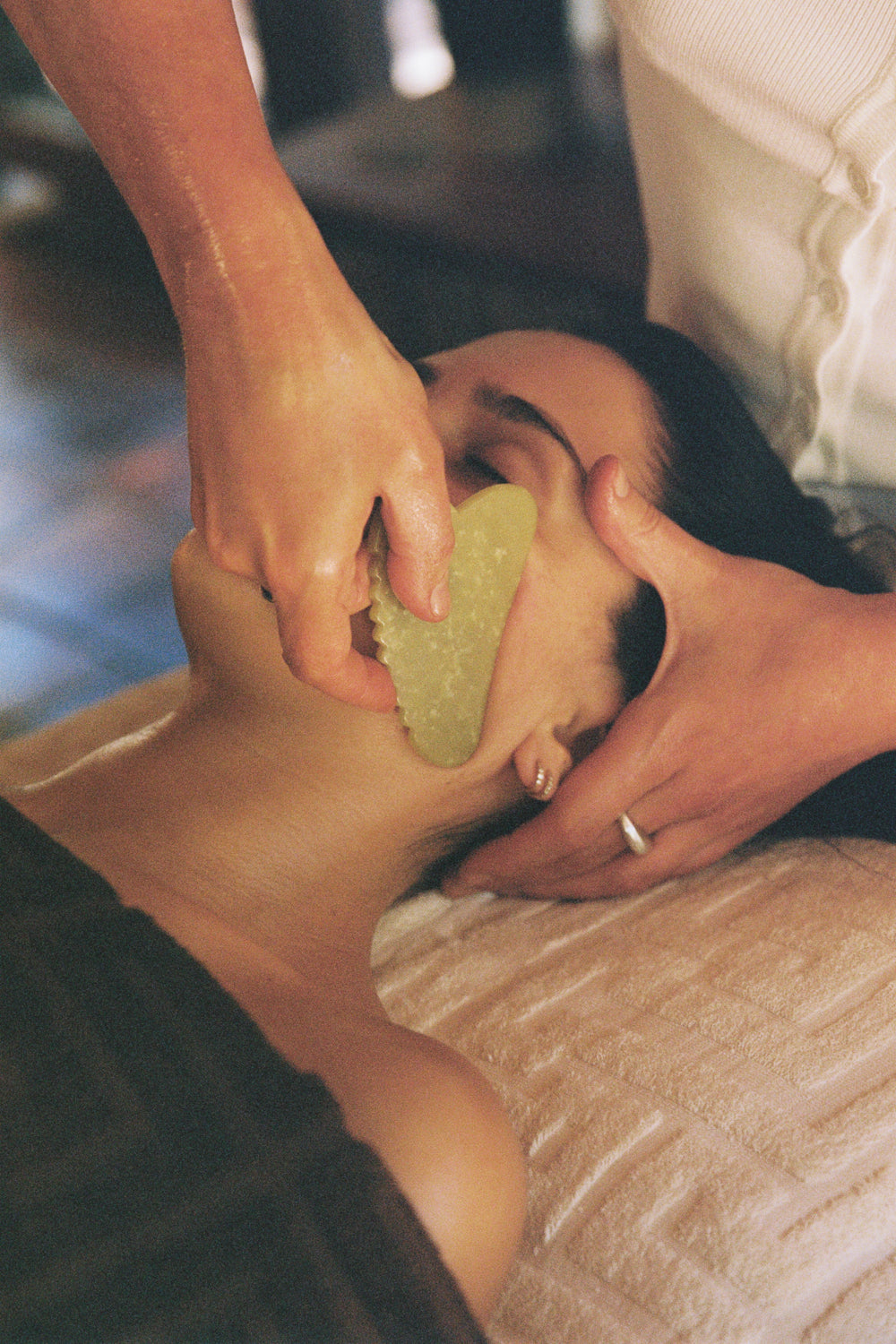
Sometimes the right treatment is almost entirely calming and product-led. Sometimes a slower facial with less pressure is still appropriate. Sometimes a reactive client also benefits from gentle drainage because the face feels heavy and stagnant, but the pace stays conservative. Sometimes the right answer is to stop, simplify, and get dermatology advice first.
Products and routines
The goal is not to build the biggest routine. It is to build the most tolerable one. Her Solis already has a useful group of product and article surfaces that support this approach, and this page is now the parent explanation that ties them together. For a practical next step, read Skin Barrier Routine.
Microbiome and evidence
Current evidence strongly supports the idea that the barrier matters. The outer epidermal layers help regulate water loss, irritation tolerance and protection from the environment. Current evidence also suggests the skin microbiome interacts with that barrier ecology, but consumer language about "balancing" the microbiome often moves faster than the science. The dedicated Skin Microbiome guide now separates what the evidence suggests from what skincare marketing often overstates.
That is why Her Solis keeps the wording restrained. A simpler, gentler routine may support comfort and tolerance for some people. Respecting the barrier may reduce self-inflicted irritation. A calmer facial may be more appropriate than strong stimulation when the skin is already overwhelmed. None of that proves that every barrier-marketed product works, or that sensitive skin, rosacea, acne or perioral dermatitis can be solved by one routine.
More high-quality research is still needed on branded barrier-repair claims, microbiome cosmetics and how commercial skincare language maps to real-world clinical outcomes. The safest interpretation is practical: support the skin's tolerance, reduce unnecessary triggers, and know when medical care belongs in the plan.
Escalation and safety
Spreading rashes, oozing or crusting skin, severe acne, painful swelling, possible infection, sudden one-sided swelling, persistent perioral dermatitis patterns, strong rosacea flares, or reactions linked to medication or medical conditions should be assessed appropriately.
Her Solis treatments are complementary wellbeing support. They may help some people feel more comfortable and less overloaded, but they are not a substitute for diagnosis, prescription treatment, or medical management of skin disease.
Choosing a slower routine, gentler cleansing, fewer actives or a more restrained treatment plan is not "doing nothing". In many barrier-compromised situations, it is the more skilled choice.
Gold Coast treatment context
Her Solis is a private studio in Currumbin Waters. Clients travel from Palm Beach, Burleigh Heads, Tugun, Elanora, Robina, Varsity Lakes, Mermaid Beach and across the Gold Coast for calmer facial treatment when the skin feels reactive, depleted or difficult to read.
If you are comparing where to start, the sequence is usually simple. Read this page for the barrier framework. Use Holistic Facials Australia for the broader treatment system. Move into Facial Lymphatic Drainage Gold Coast if puffiness and heaviness are leading. If you are considering tool-led facial massage, read Gua Sha Facial Gold Coast for the pressure and suitability boundaries first, or book directly if you already know you want a gentler consultation-led facial.
FAQs
The skin barrier is the outer protective system that helps the skin retain water, tolerate products and environmental exposure, and defend itself from irritation and microbes.
Common signs include stinging products, tightness, unusual dryness, flushing, sensitivity, flaking, and skin that suddenly tolerates less than it used to.
A facial may support comfort and reduce overload for some people, especially when the treatment is conservative and barrier-aware. It does not replace dermatology care or cure skin disease.
They overlap, but they are not identical. Sensitive skin is a broader experience of reactivity, while barrier repair usually focuses on reducing irritation and supporting tolerance. If you want the fuller symptom-led version, read Sensitive Skin Barrier Support. If you are comparing calming ingredients, read Calendula for Sensitive Skin, Chamomile for Reactive Skin and Bisabolol for Skin Barrier. If you are comparing richer lipid-support ingredients, read Sea Buckthorn for Skin Barrier.
Current evidence suggests the microbiome is relevant to skin ecology and barrier function, but microbiome marketing claims often move faster than the evidence. More high-quality research is still needed.
Sometimes that is sensible. If the skin is hot, stingy, flaky or overwhelmed, reducing exfoliation and simplifying the routine may be more appropriate than continuing to push through.
Sometimes. Because the pressure is light, it may be more suitable than stronger sculpting or tool-led stimulation for some reactive skins. If you are comparing tools, the Gua Sha Facial Gold Coast guide explains when gua sha may need to be softened or avoided. The decision depends on the level of inflammation and current skin history.
Seek appropriate care for severe or persistent rashes, possible infection, painful swelling, strong rosacea flares, severe acne, suspected perioral dermatitis, sudden changes, or medically complex skin concerns.